

Buy Dirt Bike Performance Upgrades: A Rider's Buying Guide

Last Updated: October 28, 2026
Quick Summary
Buy dirt bike performance upgrades by fixing the bottleneck first: start with air, fuel, and grip parts, then match every part to your model year, engine size and type, and prior modifications. Suspension springs and setup deliver the biggest real-world gain per dollar for most riders.
- Beginners and trail riders should start with an air filter, fresh tires, and levers rather than power parts.
- Set rider sag before touching a clicker, and re-spring riders heavier than stock springs.
- Confirm model year, engine size and type, frame generation, and prior modifications before ordering.
- Tier 1 parts cost under $150 and install in 15 to 30 minutes with basic hand tools.
- Free shipping applies on orders over $75, with 30-day returns and no standard restocking fee.
Table of Contents
- Best Dirt Bike Upgrades to Buy First
- Dirt Bike Exhaust Upgrades: Power, Sound, and Fitment
- Dirt Bike Suspension Upgrades for Handling and Control
- Dirt Bike Upgrade Parts by Model, Year, and Engine Type
- Budget Tiers, Installation Effort, and What You Get
- Find My Parts: Ordering Upgrades That Fit Right
- Frequently Asked Questions
Best Dirt Bike Upgrades to Buy First
If you are looking for dirt bike performance upgrades that actually change how the bike feels, start with the parts that control air, fuel, and grip.
Dirt bike performance upgrades are aftermarket parts that improve power delivery, handling, or durability beyond what the factory shipped. They range from a drop-in air filter to a full exhaust system.
A common mistake is buying three small bolt-ons at once instead of one part that matters. Fix the bottleneck first: a restricted intake limits what an exhaust can do, and worn suspension limits engine work.
Priority Order by Rider Skill and Discipline
The right first upgrade depends on how you ride.
- Beginners and trail riders: air filter, fresh tires, and levers set to your hand position. Power is rarely the limiter here.
- Motocross riders: suspension setup, then exhaust and jetting or fuel mapping.
- Enduro and off-road riders: durability parts first, including skid protection and a clutch that survives heat.
- Pit bike and eMoto owners: grips, foot pegs, and brake pads. Electric dirt bike riders skip engine work entirely and focus on brakes and tires.
Dirt Bike Exhaust Upgrades: Power, Sound, and Fitment
Dirt bike exhaust upgrades change power delivery, weight, and sound, but fitment decides whether the part works. A full system must match your engine size, frame, and year; slip-ons are cheaper and easier but deliver less gain.
Many tracks and trail systems enforce sound limits, so check local rules before buying.
Watch out: bolting on an exhaust without adjusting fuel delivery can make a bike run lean and lose the power you paid for. Plan the jetting or mapping change into the same job.
Dirt Bike Suspension Upgrades for Handling and Control
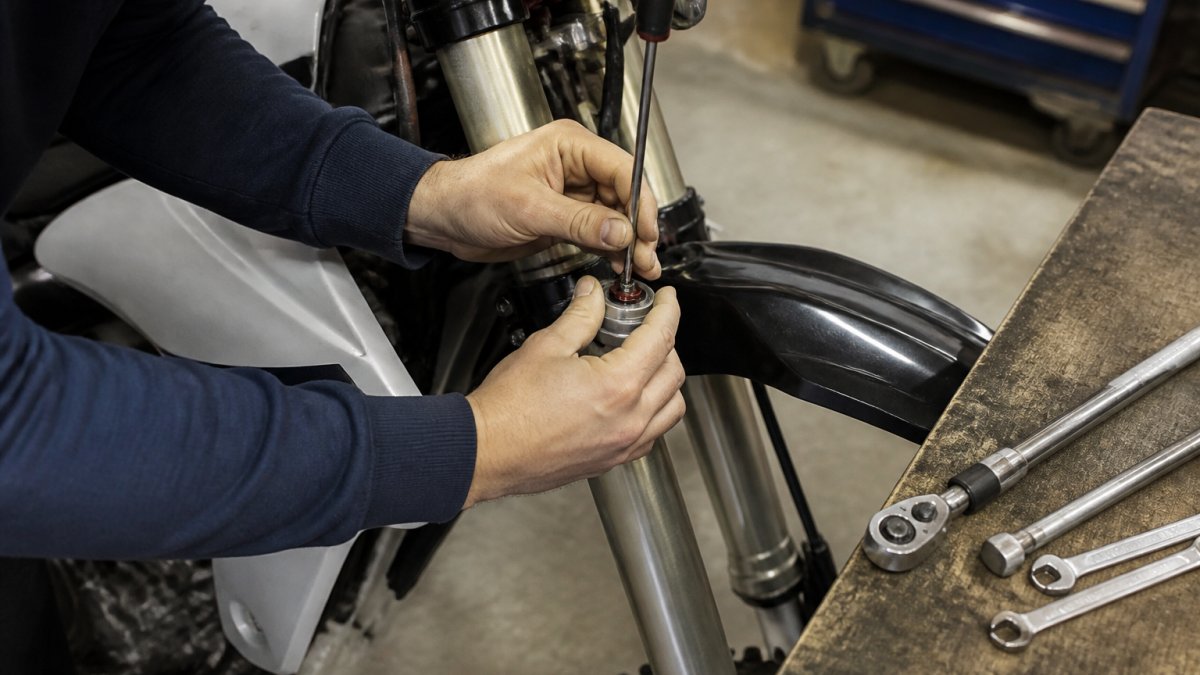
Dirt bike suspension upgrades deliver the biggest real-world gain per dollar for most riders. Springs matched to your weight and clickers tuned to your terrain change traction, braking, and confidence more than engine work.
Start with sag. Set rider sag before you touch a clicker. Riders who weigh more than the stock springs were designed for should re-spring first, then revalve later if needed.
The Motorcycle Safety Foundation treats suspension and tire condition as core pre-ride checks, and that order applies to upgrades too.
Dirt Bike Upgrade Parts by Model, Year, and Engine Type
Fitment is where online parts buying goes wrong. The same model name can span a decade of frame, engine, and intake changes, so year and engine type matter as much as the badge on the tank. A pipe that bolts to a 2019 may not clear the frame on a 2022, and a jet kit for a carbureted engine is useless on a fuel-injected one.
The four identifiers to confirm before you order
Every fitment check comes down to four data points. Write them down before you shop:
- Model year, not the year you bought it. Check the tenth character of the VIN or the sticker on the steering head.
- Engine size and type, 250cc two-stroke and 250cc four-stroke share a number but almost no parts. Confirm carbureted versus fuel-injected as well.
- Frame and subframe generation, manufacturers change mounting points between generations, which is why exhaust and skid plate fitment is generation-specific.
- Prior modifications, an aftermarket exhaust, big-bore kit, or reflashed ECU changes what will fit and what fuel delivery the bike needs.
Where fitment bites hardest
Air filters and grips fit broadly. These do not:
- Exhaust systems. Full systems are the least forgiving part you can buy. Header routing, mid-pipe length, and muffler mounts are all model- and year-specific. Slip-ons are more forgiving but still depend on the stock header diameter.
- Intake and reed components. Two-stroke reed valves and cages are matched to the engine and model year. Our KTM reed valve listing is built around that check, and Honda, Yamaha, and Kawasaki two-strokes raise the same question with their own intake parts.
- Suspension springs and valving. Spring rate depends on rider weight and bike model; valving depends on the fork and shock generation. A revalve kit for one generation will not fit the next.
- Clutch kits. Friction plate count, basket splines, and cable versus hydraulic actuation all vary by model and year.
- ECU and fuel mapping. Fuel-injected bikes need a map written for the specific model, year, and any intake or exhaust change. A generic map can run worse than stock.
A compatibility-first buying sequence
Instead of browsing by part category, browse by machine. Enter your year, model, and engine size into a vehicle-specific search.
What to have ready when you ask for fitment help
If you contact us for a fitment check, have your VIN, current exhaust and intake setup, and any engine work already done. With those three items, we can usually confirm fitment in one exchange.
Budget Tiers, Installation Effort, and What You Get
Most upgrade guides stop at 'buy this part.' The harder question is what each upgrade costs once installation and maintenance are counted. Spending should follow effort: a part you can install in twenty minutes with basic hand tools belongs in tier one; parts needing a shop or reflash belong later.
Tier 1: Entry, under $150 in parts, 15-30 minutes
Part |
Typical Part Cost |
Install Time |
Tools |
Ongoing Cost |
|---|---|---|---|---|
Air filter (drop-in) |
$25-$60 |
10 min |
None (for most bikes) |
Filter oil and cleaner, $15-$30 |
Grips |
$15-$35 |
15 min |
Grip glue, safety wire |
Replacement every season or two |
Levers |
$20-$60 each |
15 min |
Basic hand tools |
None |
Brake pads (one end) |
$25-$50 |
20-30 min |
Torque wrench, piston press |
Replacement by wear |
Tier 2: Mid, $150-$600 in parts, 1-3 hours
Part |
Typical Part Cost |
Install Time |
Tools |
Ongoing Cost |
|---|---|---|---|---|
Slip-on exhaust |
$150-$400 |
30-60 min |
Torque wrench, stands |
Repacking every season or two |
Clutch kit |
$100-$250 |
1-2 hours |
Torque wrench, clutch holder |
Replacement by wear |
Tires (pair) |
$120-$300 |
1-2 hours or shop mount |
Tire irons, stands, rim protectors |
Replacement by wear |
Suspension springs (pair) |
$150-$350 |
1-2 hours |
Spring compressor, stands |
None |
Tier 3: Advanced, $600 and up, shop visit
Part |
Typical Part Cost |
Install Time |
Tools |
Ongoing Cost |
|---|---|---|---|---|
Full exhaust system |
$400-$1,200 |
2-4 hours |
Torque wrench, stands, gaskets |
Repacking, rejet or remap |
Suspension revalve |
$300-$800 plus labor |
Shop visit |
Specialized tooling |
Service intervals |
Engine work (big bore, porting) |
$500-$2,000+ |
Shop visit |
Machining, specialized tooling |
Higher maintenance, shorter service life |
ECU reflash or tuner |
$200-$600 |
30 min once mapped |
Laptop or handheld tuner |
Map updates |
How to sequence spending
Check current prices on our site before you commit.
Find My Parts: Ordering Upgrades That Fit Right
At Steel Steeds, our vehicle-specific parts search tool helps you find parts for your machine. Free shipping applies on orders over $75, and 30-day returns come with no standard restocking fee. If you are unsure, ask us for expert fitment support.
Ready to buy dirt bike performance upgrades without the guesswork? Find my parts and get back on the trail faster.
Frequently Asked Questions
What are the best performance upgrades for a dirt bike?
Start with the parts that change how the bike behaves under you: tires and gearing, then suspension setup, then an exhaust and air filter. Dirt bike performance upgrades that add power only pay off once the chassis can put it down. Riders who ride tight trails often get more from a revalved fork and a lower gear ratio than from a full exhaust. Work in that order and each upgrade builds on the last.
How do I make sure a dirt bike part fits my bike?
Match the part to your exact model, year, and engine size, not just the model family. Manufacturers change frame mounts, exhaust routing, and fork diameters between generations, so a part listed for a 2019 model may not bolt onto a 2015. Use a vehicle-specific parts search tool and confirm the listing names your year and displacement.
Can I install dirt bike performance parts myself?
Most bolt-on upgrades, including slip-on exhausts, air filters, hand guards, levers, and foot pegs, are doable in a garage with basic hand tools. Suspension revalving, engine work, and clutch basket replacement need specialty tools and torque specs, so budget for a shop if you are not set up for it. Keep the stock parts; they help at resale and give you a fallback if a modification does not suit your riding.
Are dirt bike performance upgrades worth the money?
It depends on what you want fixed. Set a budget, fix the weakest part of your ride first, and skip upgrades that only change appearance. Steel Steeds lists current prices online so you can compare before you commit.
The hardest part of upgrading is knowing which part fits your exact machine. Steel Steeds takes that risk out of the order with a vehicle-specific parts search tool, expert fitment support, and 30-day returns with no standard restocking fee. Get started with Steel Steeds and ride with parts you know will bolt on.

Leave a comment